Joint Pain
If joint pain or stiffness has been affecting your daily mobility, you may have come across regenerative medicine in your research. This page explains, plainly, what that can involve and where its limits are.
International Patient Guide →Last reviewed: 2026-07-23
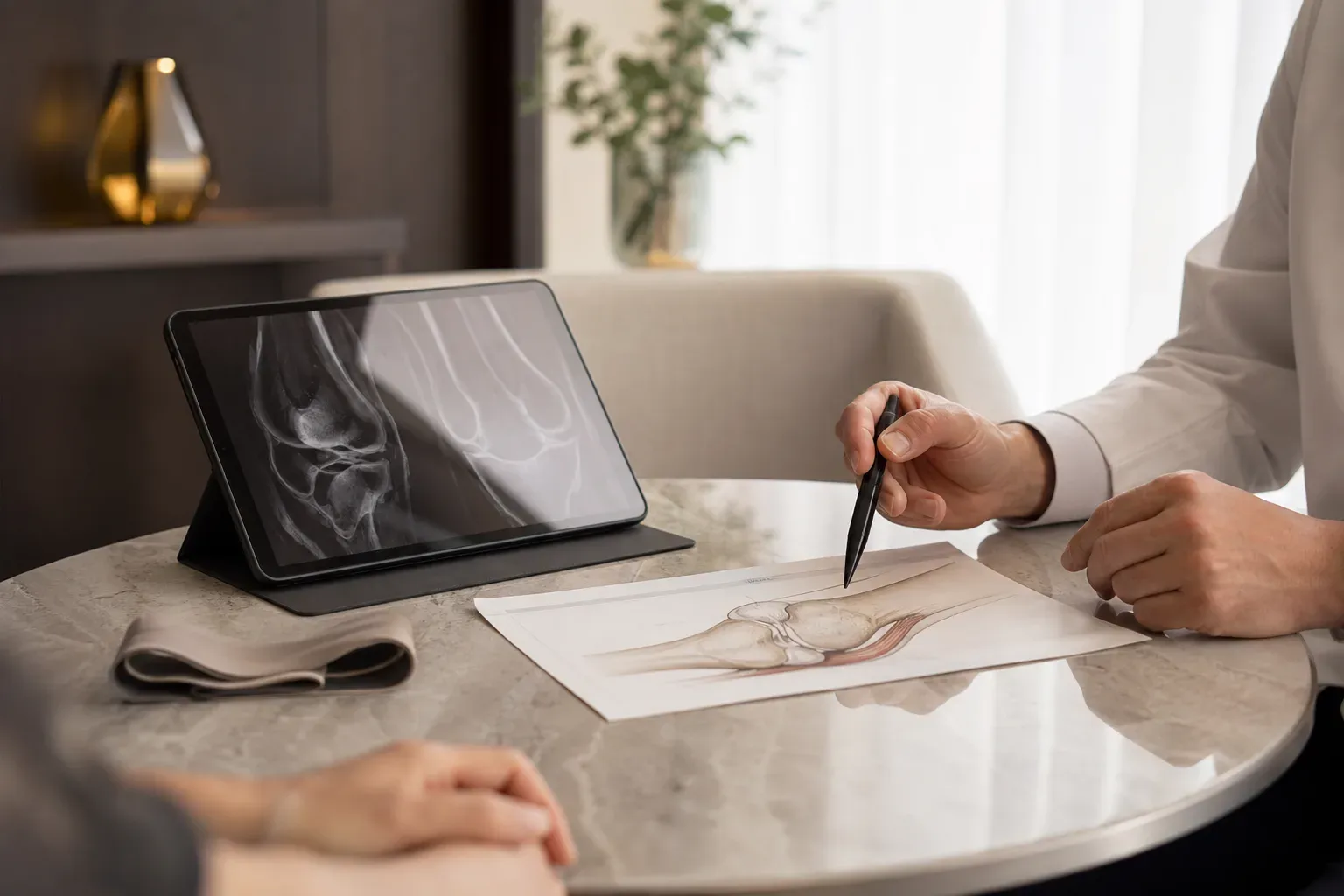
What People Usually Notice
Why It May Happen
What to clarify before considering care in Japan
Some patients researching joint pain consider autologous stem cell therapy as part of a broader plan to support tissue quality and mobility, without surgical intervention. This is intended to support the body's own regenerative capacity — it is not a guaranteed alternative to surgery, and it does not reverse existing structural joint damage.
Whether this approach is appropriate depends on your specific case, including the underlying cause of your joint pain, which your physician reviews individually before any treatment plan is discussed.
Full detail on how the treatment itself works — from tissue collection through culture and administration — is on our Stem Cell Therapy page and our Safety & Regulation overview.

Related Treatment Options
Stem Cell Therapy
Autologous adipose-derived stem cell therapy, cultured under clean-room conditions, coordinated within Japan's regulatory framework for regenerative medicine — for patients pursuing measured, physician-directed longevity care rather than a one-time cosmetic procedure.
Autologous PRP Treatment Coordination
A practical route for international patients who want to discuss platelet-rich plasma options for a joint, soft-tissue, scalp, or aesthetic concern with a receiving physician in Japan.
International Patient Journey
Continue Reading
Practical planning questions related to this topic.
Risks & Limitations
No specific improvement in joint pain or mobility is guaranteed.
This treatment does not reverse existing structural joint damage and is not a substitute for a diagnosed condition requiring surgical or specialist orthopedic care.
Candidacy is confirmed individually; some patients are advised to delay treatment or not proceed at all.
Individual response varies with age, health status, and the underlying cause of joint pain.
Minor risks are possible with any procedure involving tissue collection or injection.
Frequently Asked Questions
No. It's not positioned as a guaranteed alternative to surgery. Whether it's appropriate for your case — or whether surgical or specialist orthopedic evaluation is more suitable — is something your physician reviews individually.
No. Our protocols are intended to support tissue quality and the body's own regenerative capacity — they do not cure a diagnosed joint condition.
There is no fixed timeline. Individual response varies, and your physician discusses realistic expectations for your specific case rather than a guaranteed schedule.
It's helpful but not required to begin a review — recent imaging or a specialist diagnosis, if you have it, gives your physician useful context.
It's a related but distinct approach. Our Regenerative Aesthetics content covers PRP, exosomes, and culture supernatant formulations, which are used for different purposes than stem cell therapy.
Let us understand the case before anyone recommends a plan.
Share your goals, medical background, and travel window. StemCellor will help organize the next step around physician review, realistic expectations, timing, and reference cost.
Direct messaging channels are still being confirmed — for now, start through the international patient guide.

Send the main concern, treatment goals, and any medical history that may affect candidacy.
We help clarify which treatment area may be worth discussing before travel is planned.
When appropriate, the case is prepared for physician review and visit planning in Japan.