Stem Cell Therapy
Autologous adipose-derived stem cell therapy, cultured under clean-room conditions, coordinated within Japan's regulatory framework for regenerative medicine — for patients pursuing measured, physician-directed longevity care rather than a one-time cosmetic procedure.
Prepare an Inquiry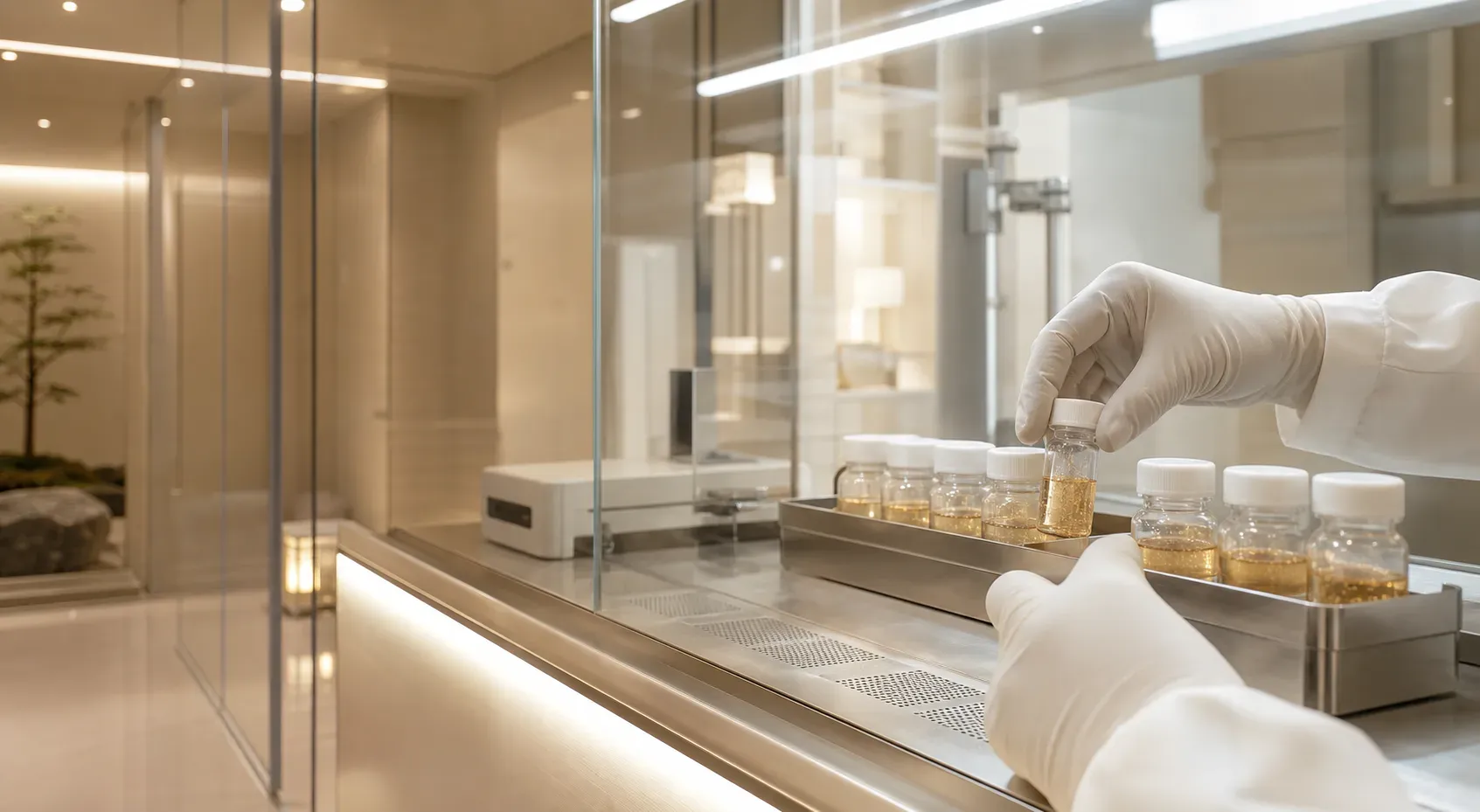
What It Is
Stem cell therapy at StemCellor uses a small volume of your own adipose (fat) tissue as the source material. Cells are isolated, expanded, and purified at a cell-processing facility under clean-room conditions, then reintroduced to your body by intravenous infusion. Because the cells originate from you and are returned to you, the intent is to support your body's own regenerative and circulatory capacity — not to introduce foreign biological material.
Regenerative medicine in Japan — including autologous adipose-derived stem cell infusion — is provided within Japan's Act on the Safety of Regenerative Medicine, which classifies treatments by risk level and requires provider review by a certified regenerative medicine committee before treatment begins. StemCellor organizes information and appointment coordination; the receiving licensed physician or medical institution confirms which regulatory category applies and whether treatment can be appropriately offered for your individual case.
Individual response to autologous cell therapy varies with age, health status, and treatment goals; your physician will set expectations specific to your case during consultation, and pretreatment infectious-disease blood screening is required before any tissue is collected.
Who It's For
Who May Not Be Suitable
The Treatment Experience
What to have ready
Typical Timeline in Tokyo
This treatment is typically planned across two visits to Tokyo rather than a single trip, because cell culture and purification take several weeks.
Exact timing is confirmed individually with your physician based on your screening results and culture progress — this is a general outline, not a fixed itinerary.
International Patient Guide →Safety & Regulation
Autologous stem cell treatment in Japan is provided within the Act on the Safety of Regenerative Medicine, which requires review by a certified regenerative medicine committee before administration begins; the receiving licensed physician or medical institution confirms the applicable regulatory category for your case. Cells are processed exclusively under clean-room conditions, and only cells confirmed sterile and genetically stable are released for use.
Minor risks — localized pain, swelling, bruising, or infection at the collection or infusion site — are possible with any procedure involving tissue collection; rare systemic reactions have been reported in the wider clinical literature on autologous stem cell infusion, and your physician will review these in full before you consent to treatment.
Individual response varies with age, health status, and treatment goals. This is a self-pay elective treatment outside Japan's national health insurance system, and — as with any regenerative therapy still building its long-term evidence base — your physician will discuss what outcomes are realistic for your specific case rather than a guaranteed result.
Regenerative medicine in Japan is provided under specific medical and regulatory requirements. StemCellor coordinates information and appointment planning; the receiving licensed physician or medical institution confirms whether a treatment can be appropriately offered for an individual case.
Read Our Safety & Regulation Overview →
Follow-Up & Complications
If you notice any concerning symptoms after treatment — whether you're still in Tokyo or have already returned home — use the contact route confirmed by the receiving physician or medical institution for your individual case rather than waiting for a future appointment. Urgent symptoms require local medical care first.
Follow-up arrangements, including any remote review after you return home, are confirmed case by case by the receiving physician or medical institution. They do not replace local emergency care.
Related Conditions
Chronic Fatigue
Persistent low energy and reduced day-to-day resilience are common reasons patients first look into regenerative and longevity medicine — here's what that can, and cannot, mean for your care.
Joint Pain
Ongoing joint discomfort or reduced mobility is one of the most common reasons patients research regenerative medicine — here's an honest look at what may help, and what it can't do.
Mobility & Recovery
When movement feels less comfortable or recovery after activity takes longer, the right first step is to understand the underlying question with a clinician, not to self-select a procedure.
Sports Injury & Return to Activity
After an injury or a prolonged recovery, it can help to organise the right records and questions before asking a physician in Japan whether any consultation is appropriate.
Chronic Pain & Daily Function
Persistent pain can affect work, sleep, travel, and daily life. A careful first step is to clarify the clinical question before seeking an international consultation.
Men's Health & Erectile Function
Questions about erectile function deserve a private, clinician-led discussion. Before considering travel, it helps to organise the relevant health context rather than self-selecting a procedure.
Continue Reading
Practical questions to explore before assuming a treatment path.
Frequently Asked Questions
01How many sessions does this treatment require?
A single stem cell infusion is one treatment cycle. Some patients pursue additional cycles as part of a longer-term longevity plan; your physician will discuss what's appropriate for your case, not a fixed protocol applied to everyone.
02How soon will I see results?
Individual response to autologous stem cell therapy varies with age, health status, and treatment goals. Rather than a fixed timeline, your physician schedules follow-up reviews to monitor your condition after treatment.
03Is the price tax-inclusive?
Yes — the ¥3,520,000 price shown for the stem cell IV infusion is tax-inclusive. A separate ¥22,000 (tax included) infectious-disease blood screening is required beforehand; see the Pricing page for the full breakdown.
04What are the risks or side effects?
Minor risks — localized pain, swelling, bruising, or infection at the collection or infusion site — are possible with any procedure involving tissue collection. Your physician reviews the full risk profile with you before you consent to treatment.
05Is this covered by insurance?
No — stem cell therapy is a self-pay elective treatment outside Japan's national health insurance system.
06Who is not suitable for stem cell therapy?
Patients with active cancer or certain prior malignancies, an unresolved infectious-disease screening result, significant uncontrolled medical conditions, or those who are pregnant or breastfeeding are generally not suitable candidates. Your physician confirms candidacy individually during screening.
07How many visits to Tokyo will I need?
This treatment is typically planned across two visits, because cell culture and purification take several weeks. Most patients return home between cell collection and administration.
08What happens after I return home?
Follow-up arrangements, including any remote review, are confirmed case by case by the receiving physician or medical institution. For urgent symptoms, seek care from a local medical provider first.
¥3,520,000 (tax included) per infusion cycle
Includes the adipose-derived stem cell IV infusion; a ¥22,000 (tax included) infectious-disease blood screening is required beforehand. Initial and follow-up consultations are complimentary. If screening indicates hepatitis B or C, an additional ¥110,000 (tax included) processing fee applies. Multi-session courses are available — ask your physician for a personalized plan and quote. See our Pricing page for the full price list.
Your final treatment plan and costs are confirmed only after your physician's assessment.
05 — International Patient Support
Let us understand the case before anyone recommends a plan.
Share your goals, medical background, and travel window. StemCellor will help organize the next step around physician review, realistic expectations, timing, and reference cost.
Direct messaging channels are still being confirmed — for now, start through the international patient guide.

Send the main concern, treatment goals, and any medical history that may affect candidacy.
We help clarify which treatment area may be worth discussing before travel is planned.
When appropriate, the case is prepared for physician review and visit planning in Japan.